While I generally hold a positive view of modern witchcraft and the pagan community, certain aspects warrant a discussion or rant. In this series, I aim to address some of these issues through what I hope is a constructive and thoughtful critique.
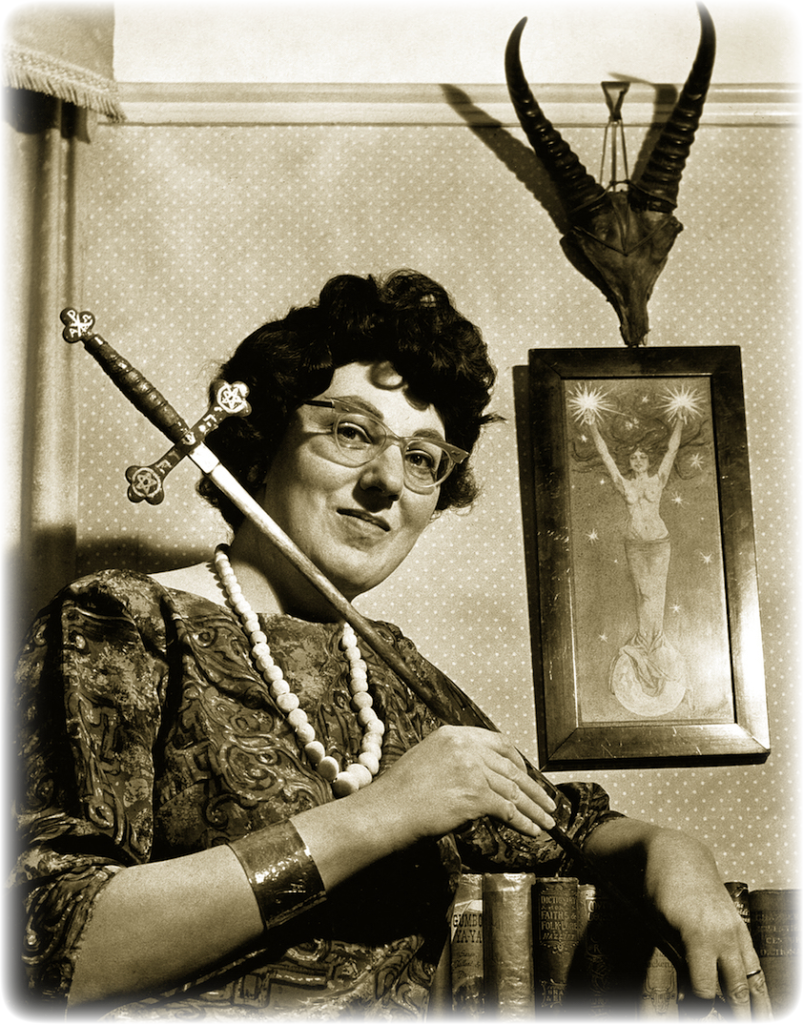
Modern witchcraft owes a great debt to the pioneers of the early to mid-20th century, such as Gerald Gardner, Doreen Valiente, Alex Sanders, Dion Fortune, and Margaret Murray, to name but a few. But not all is rosy with the legacy that these elders have passed down to us. Modern Witchcraft, especially as filtered through Wicca, often arrives wrapped in soft lighting and safe language. “An it harm none, do what ye will.” It sounds gentle. Reassuring. Almost… acceptable.
That should already make you suspicious.
Because witchcraft has never been about being acceptable.
The now-famous Wiccan Rede didn’t descend from some ancient lineage of cunning folk whispering ethics across the centuries. It emerged in the mid-20th century, shaped by the figures mentioned above, and was only publicly recorded in the 1960s.
It was part of a new religious movement trying to define itself in a world still deeply Christian, still suspicious, still primed for moral panic.
And here’s the uncomfortable truth: that context mattered more than we like to admit.
Wicca didn’t just revive witchcraft. It translated it, or should that be mis-translated it?
Respectability as Survival Strategy
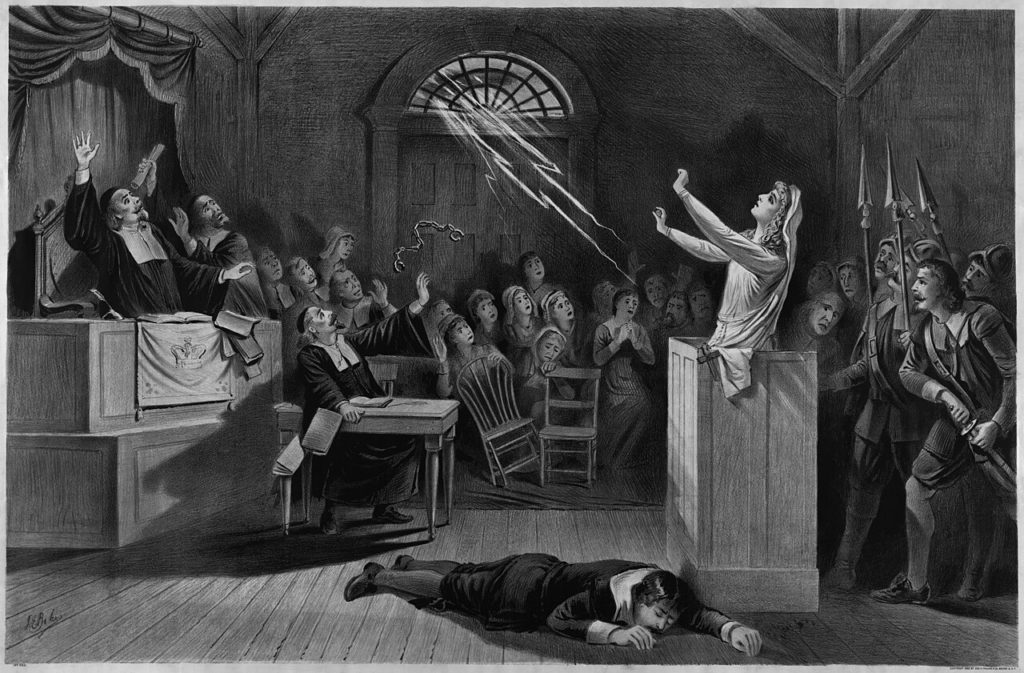
Britain in the mid-20th century had only just shaken off the legal framework that criminalised witchcraft. Gardner’s seminal “Witchcraft Today” was published only after the repeal of the Witchcraft Act in 1951.
This wasn’t an ancient coven emerging from the forest. This was a new religion popping its head out from behind the curtain, aware of how easily it could be pushed back into shadow.
So, what do you do when your entire identity has been demonised for centuries?
You make yourself legible to the dominant culture.
You emphasise that you are not dangerous.
You stress that you are not Satanic.
You insist, loudly and repeatedly, that you harm no one.
The Rede becomes less an ethical insight and more a diplomatic passport.
And it worked.
Wicca spread. It became the public face of modern paganism, especially through the counterculture of the 1960s and beyond.
But something was lost in the translation.
Witchcraft Was Never Innocent
Historically, the label “witch” was not given to kindly herbalists minding their business. It was a social weapon.
Accusations of witchcraft were overwhelmingly aimed at the marginal: women, the elderly, the poor, the socially difficult, the inconvenient.
Witchcraft existed in the imagination of the powerful as a threat, a disruption, a refusal to conform.
And outside of those accusations? The people who worked magic, the cunning folk, the healers, the curse-breakers, even the midwives, lived in a morally complex space. They healed… and they harmed. They protected… and they retaliated.
They operated in a world where power was uneven, and magic was one of the few tools available to redress that imbalance.
Witchcraft, in this sense, was never neutral.
It was political before it had the language for politics.
It was the weapon of the poor, marginalised and disenfranchised.
The Sanitisation of the Craft
The problem with “harm none” is not that it encourages responsibility. That’s a fine and necessary thing.
The problem is what it erases.
It flattens witchcraft into something palatable, something safe, something that can sit comfortably beside the very systems that once sought to destroy it.
It subtly suggests that anger is unspiritual.
That justice must always be gentle.
That power should never have a bite.
But for most of history, witches didn’t have the luxury of harmlessness.
When you are powerless, harm is not an abstract philosophical question. It is survival. It is protection. It is sometimes the only language left.
To insist on “harm none” as a universal law is to impose a morality shaped by comfort onto traditions born of discomfort, pain and rebellion.
The Cost of Being Acceptable
Neo-pagan elders didn’t set out to weaken witchcraft. They were navigating a hostile world, building something that could survive public scrutiny.
But in doing so, they made a bargain.
They traded danger for legitimacy.
Teeth for smiles.
Fire for candles.
And ultimately, power for palatability.
And now we inherit a version of witchcraft that often feels strangely… defanged.
A craft that hesitates where it once would have acted.
A spirituality that apologises for its own power.
Reclaiming the Edge
To challenge “harm none” is not to advocate cruelty or recklessness. It is to recognise that ethics in witchcraft have always been situational, embodied, and rooted in lived reality, not slogans.
It is important to remember that:
Boundaries can wound.
Justice can sting.
Protection can look like harm from the outside.
And that’s the point.
Witchcraft has always lived at the edges: of society, of morality, of what is permitted. It belongs to those who need it, not those who wish to make it respectable.
So perhaps the question is not “does it harm none?”
Perhaps the older, quieter question is:
Who does it serve?
Is it needed?
Is it deserved?
Because that has always been the real magic.
Let me know below what your thoughts are on this.
If you enjoyed this content, please share and check out my other posts over on the blog.
Leave a Reply