There is a longstanding taboo around death in the modern world. Not grief itself, we still speak of grief in hushed tones, careful not to upset those around us, but the physical reality of death. What happens to the body once the soul, spirit, breath, spark, or consciousness has gone? As a result, have industrialised death so thoroughly that most people never stop to ask a startling question: What does our funeral do to the Earth?
For many people, the answer is uncomfortable, and this is partly the reason that we find ourselves in this situation. Modern cremation burns at temperatures approaching 1000°C, consuming vast amounts of natural gas. Traditional burial often involves embalming chemicals, hardwood coffins, concrete vaults, metal fittings, synthetic fabrics, and permanently allocated land. Even in death, we remain consumers of resources. Our final act on Earth becomes one more act of extraction from it.
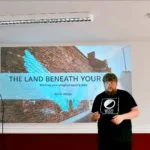
And yet, across Britain and beyond, a movement is beginning to grow beneath the polished marble and chrome handles of the capitalistic funeral industry. A movement asking whether death could become an act of giving rather than consumption. Whether the body could return not as waste, but as nourishment. People like Kristoffer Hughes and his new enterprise Eterrna are part of that conversation. Their work around terramation, also called natural organic reduction or human composting, does not merely offer an alternative funeral method. It challenges the entire philosophy of how modern culture relates to death, decay, and the living world.
The History of Cremation in the UK
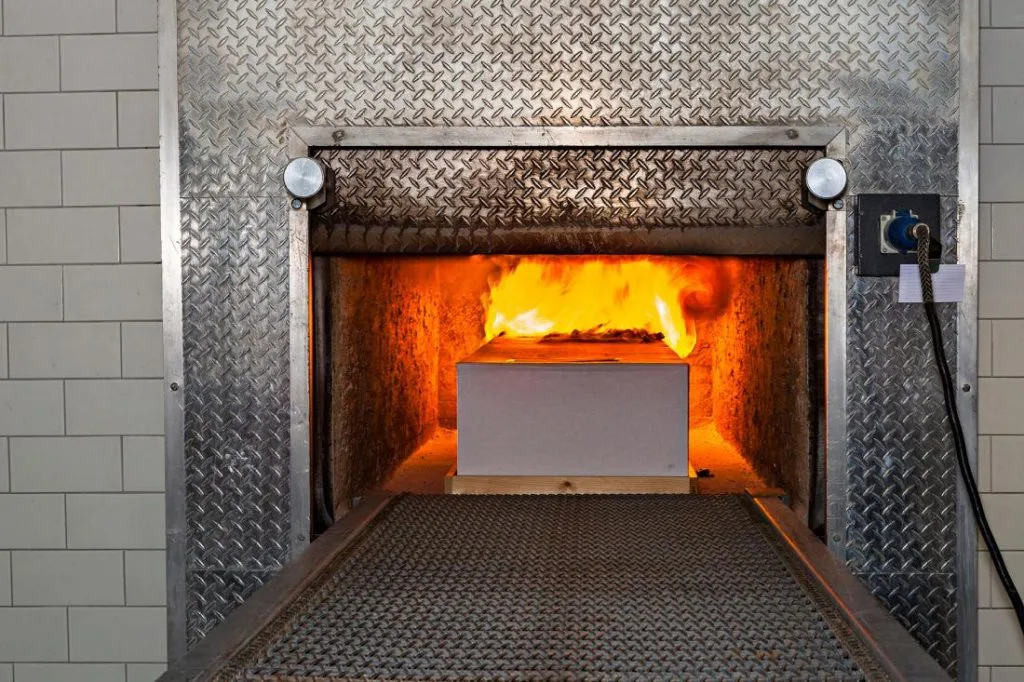
Before cremation became common in Britain, it was seen as shocking, un-Christian, and deeply taboo. Victorian society viewed burial as the only proper and sacred way to treat the dead, while cremation was associated with paganism and primitive behaviours.
That changed largely because of an eccentric doctor from the lead mining town of Rudry in South Wales, Dr William Price, one of the most unusual figures in social history. Price was a Welsh doctor, radical thinker, and self-proclaimed Druid who rejected many Victorian norms. He wore green robes, advocated Welsh nationalism, and believed cremation was more hygienic and environmentally sensible than burial. At a time when overcrowded graveyards were becoming a public health concern, he argued that burying bodies polluted the earth and water.
In 1884, after the death of his infant son, Price attempted to cremate the body on a hillside near Llantrisant. Horrified locals stopped the ceremony and Price was arrested. However, during the court case, the judge ruled that cremation was not actually illegal under British law, provided it didn’t create a public nuisance. The case became a turning point in British funeral history. It effectively legalised cremation in Britain and helped pave the way for its growing acceptance in the decades that followed.
There is an interesting irony in this bit history. Cremation was once seen as the modern, cleaner alternative to burial. Today, however, people are increasingly questioning its environmental impact due to the elevated levels of energy and carbon emissions involved.
In many ways, the Druid Dr Price opened the door to the same conversation we are having now: how can we care for the dead in ways that also care for the living world? It might have taken another Druid to bring us a possible solution.
The Carbon Cost of Cremation
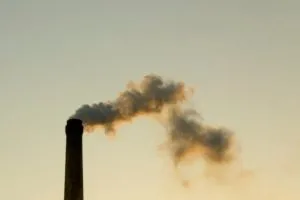
Cremation is often marketed as the simpler and greener option. No cemetery plots. No sprawling graveyards. It feels simpler, easier and cleaner; fire reduces the body quickly and efficiently. But that fire isn’t as clean as you would think. A single cremation can release an average of 245 kilograms of CO₂ into the atmosphere, depending on the crematorium and fuel system used [1]. Equal to driving an average petrol car approximately 600 to 750 miles. It would require 12 mature trees, growing for a full year to absorb the CO2 produced by one cremation. In the UK, where cremation accounts for the overwhelming majority of funerals, the collective impact becomes enormous. Some figures suggest a total of 115,150 tonnes of carbon released each year through cremation in the UK.
Unfortunately, the environmental impact does not end there: Cremation also releases mercury vapour from dental fillings, along with particulates and other airborne pollutants. These pollutants can increase the risks of heart disease, lung cancer, asthma, and adverse birth outcomes [2]. Modern filtration systems reduce some of these emissions, but they cannot erase the carbon produced by sustaining such extreme temperatures.
It is an unsettling irony that at precisely the moment a human life ends, a moment when consumption should finally cease. The man-made machinery of fossil fuel consumption roars into action one final time. One last exhalation of carbon into an already burdened atmosphere. I can’t help but find something symbolically jarring about that. For cultures rooted in reverence for land, seasonality, and ecological balance, the idea that death itself has become industrial combustion can feel deeply alienating.
Burial Is Not Innocent Either
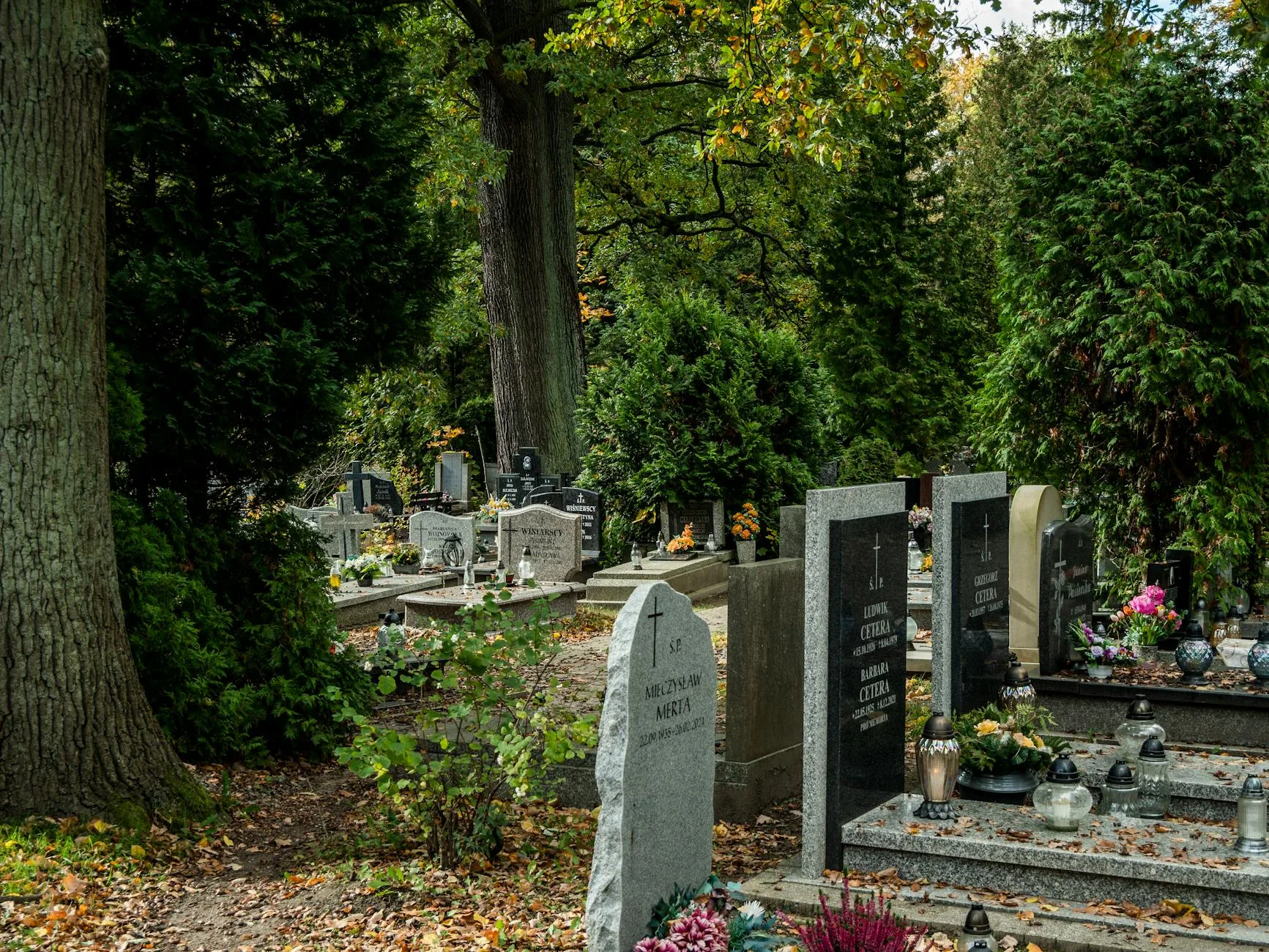
Traditional burial often escapes criticism because it appears more natural, the body goes into the earth to decompose. Yet modern burial is rarely as simple as placing a body back into the soil to enrich the land. Many conventional burials involve embalming fluids that primarily consist of formaldehyde, methanol, and other solvents [3]. Coffins are frequently constructed from varnished hardwoods, chipboard, plastics, metals, and synthetic linings. Concrete vaults and grave liners consume immense resources in their production and leave lasting scars on the landscape.
In the United States alone, burial practices consume vast quantities of steel, concrete, and hardwood every year. While the UK differs somewhat in practice, the broader issue remains the same: modern burial often attempts to prevent natural decomposition rather than participate in it. We preserve the dead as though decay itself were a failure or shameful, but far from failure, decay is a fundamental part of ecology. Forests are built from death. Soil is made from decomposition. Every oak tree stands atop centuries of fallen leaves, insects, fungi, animals, and dead roots; the Earth wastes nothing.
Death as Separation
One of modern Western culture’s deepest illusions is that humans exist separate from nature. We pave over rivers, turn forests into managed parks, and package food so neatly that children can grow up without realising that beef comes from cows. Death reflects the same disconnect. Bodies vanish behind hospital curtains, funeral home doors, and crematorium walls. The dead become a practical problem to be managed and disposed of.
Yet older spiritual traditions often viewed death differently. In many animistic, indigenous, and earth-centred traditions, death was not an exit from nature but a return to participation within it. The body fed the land that fed the tribe. I recently heard a great line from Kristoffer Hughes on the Moon Books Podcast that went something like: “To live is to borrow molecules. To die is to return them to the land.” [4] Hughes argues that our responsibility in death is to return those borrowed molecules back to the Earth. There is poetry in that perspective, but also realism. The body is not separate from the ecosystem, it is ecosystem: Bone minerals, water, carbon, nitrogen, calcium, iron. We are the building blocks of life wrapped briefly in skin. We are constructed of molecules that have been countless forms before. Modern funerary systems often treat the corpse as hazardous waste requiring industrial management. Terramation asks a different question: What if the body is still useful?
What Is Terramation?
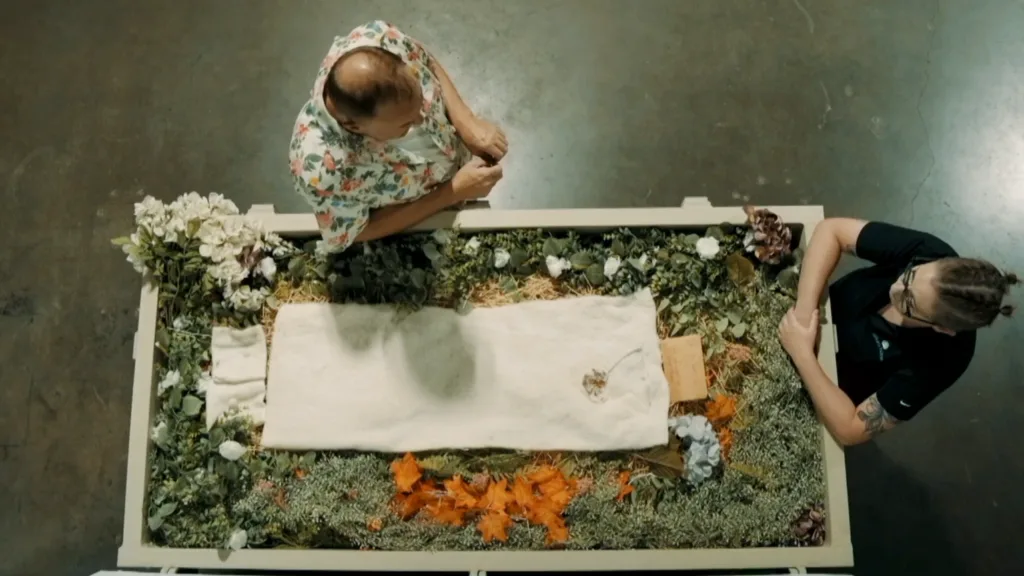
Terramation, also called natural organic reduction, is a process that transforms human remains into nutrient-rich compost through controlled decomposition. Rather than using fire or chemical preservation, the body is placed in a vessel with natural organic materials such as straw, alfalfa, and wood chips. Over several weeks, microbes and oxygen facilitate decomposition in a carefully monitored environment. The result is clean, fertile compost. For some readers, that sentence alone may provoke discomfort.
Human composting sounds shocking and confronting because Western society has spent generations distancing itself from natural decomposition. We are culturally conditioned to see decomposition as a thing of horror rather than transformation. But from an ecological perspective, terramation may be one of the most sensible funeral methods we have developed since the advent of proto-sky burials. According to reports cited by advocates, natural organic reduction can produce around 90% less CO₂ than conventional cremation while avoiding embalming chemicals entirely. Emerging research also suggests that composted remains used in conservation or rewilding projects may help sequester up to 1.4 tonnes of CO₂ per body [5].
No fossil-fuel inferno.
No concrete chamber.
No chemically saturated soil.
No polished coffin designed to resist the natural processes.
Just a return to the land that made us.
A Different Spiritual Imagination of Death
One reason earth-centred spirituality resonates so deeply today is that it sees humanity not as rulers over nature, but as part of it. In that view, death is no longer exile but continuity. For Druids, Pagans, animists, and many ecologically minded spiritual thinkers, there is something profoundly sacred in literally returning to the land: nourishing trees, feeding soil, and becoming habitat for new life.
There is a mentality embedded in industrial society that death must leave nothing behind except memory. But perhaps legacy can be biological as well as emotional. A forest fed by human remains leaves a different kind of memorial, a living immortality. This is where companies like Eterrna seem to touch a nerve far deeper than environmental practicality alone. Their language intentionally frames terramation not as disposal, but as a sacred transformation. The emphasis is not merely on sustainability, but relationship. Because funerals are not logistical problems, they are spiritual events. Even for secular people, death rituals carry enormous symbolic power. They reveal what a culture believes about the body, the Earth, and the meaning of being human. A crematorium says one thing, meanwhile a living forest says something completely different.
The Resistance to Green Death
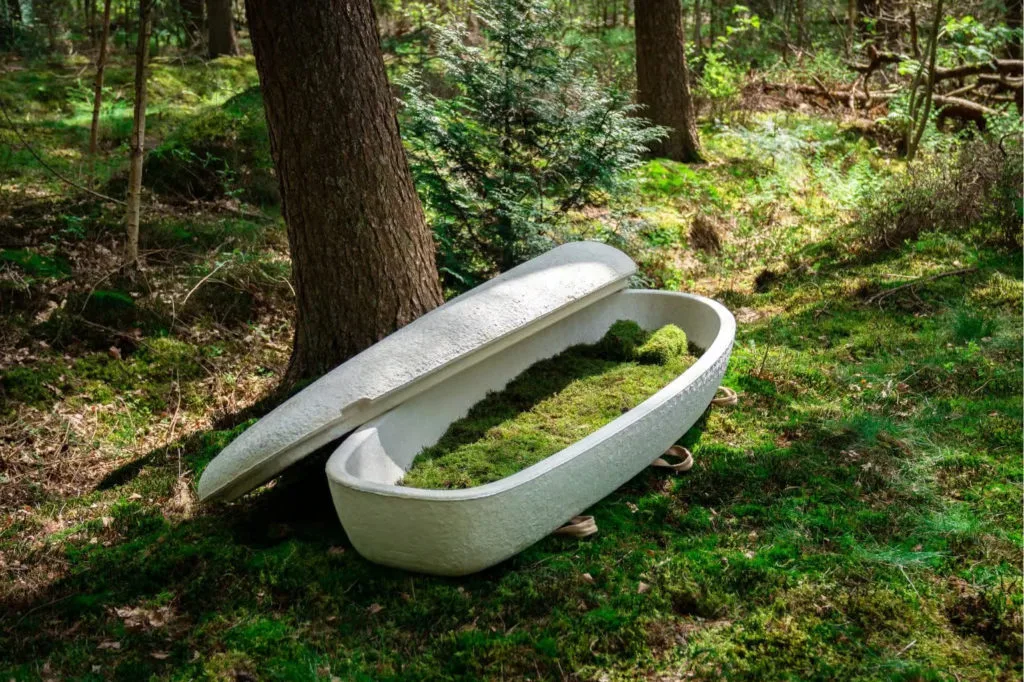
Of course, alternative funerary methods still face resistance. Some people find the idea of terramation disturbing, others worry it sounds undignified or too radical. There are also legitimate concerns about regulation, ethics, and potential greenwashing within the rapidly growing eco industry. And yet every major funerary shift in history was once considered grotesque. Cremation itself horrified Victorian Britain when it first emerged. Now it is ordinary. Water cremation, or aquamation, is beginning to gain legal recognition in parts of the UK as environmental concerns reshape public attitudes toward deathcare. Cultural taboos are not fixed, they evolve. What often changes them is not technology alone, but the emotion surrounding the subject. IT starts when people begin to ask tough questions:
Why do we pump corpses full of chemicals?
Why do we burn so much fuel to dispose of a body?
Why are cemeteries landscapes of concrete and stone?
Why is returning naturally to the Earth considered strange?
Becoming a Gift
There is a phrase Kristoffer Hughes used when discussing terramation that lingers on my mind and may be at the heart of this whole question. He described the possibility of becoming “a gift, rather than a burden.” Modern industrial culture often treats human existence as extractive from beginning to end. We consume resources in life and then consume even more in death. The Earth, as mother, gives endlessly while receiving nothing but destruction and toxicity in return. Green deathcare asks whether our final act could instead become reciprocal. Could a funeral heal rather than merely dispose of a body? Could grief grow forests? Could memorials restore habitats? Could the dead nourish and create life?
These are not merely ecological questions; they are spiritual ones too. Because how we treat the dead reveals how we understand the living world. A society terrified of decay becomes disconnected from cycles, while a society that embraces return may rediscover belonging. In the end, perhaps the deepest wisdom is also the oldest:
We do not stand outside nature.
We never did.
And when the final breath leaves the body, the Earth does not want grand gestures and memorial structures, simply return.
Sources and further reading:
[1] https://thecdsgroup.co.uk/the-uk-cremation-industry-emissions/
[2] https://ncceh.ca/resources/evidence-reviews/crematoria-emissions-and-air-quality-impacts
[3] https://www.cremation.green/embalming-fluid-environment-impact/#what-is-embalming-fluid
[4] https://youtu.be/NLVEVlCBwlY?si=d1xzu3oMwqOBOMrb
[4] https://www.sustainableni.org/assets/cms/downloads/Beyond-Burial-and-Cremation.pdf